

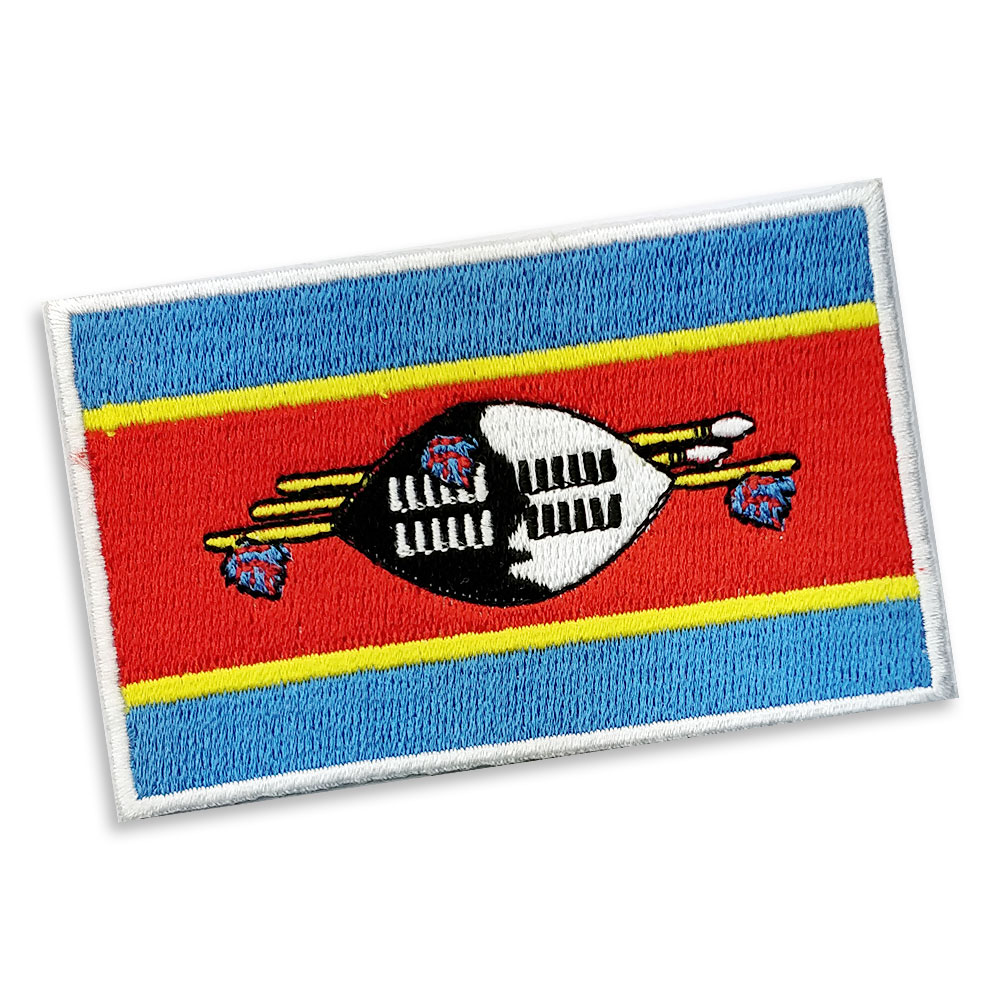
Flag of Eswatini Size: The National Flag of the country is rectangular and highlights three-level groups with two blue stripes at the upper and lower while the middle band is red. The red shaded band is edged in the yellow shade. Two yellow stripes line the red band. On the red stripe, there is a bull conceal fight seal from the conventional Swazi Emasotsha Regiment, laid straight covering two lances and staff adorned and supported with feather decorations of a widowbird, which is all positioned evenly. The banner has a width-to-length extent of 2:3. The banner has five bands. Meaning: The shield and the two lances imply security from unfamiliar foes. The blue shading represents harmony and solidness. The red tone addresses the country’s previous battles. The yellow tone addresses the mineral assets of the country. The shield, lances, and staff represent assurance from the nation’s adversaries, while the high contrast shades of the shield are intended to depict highly contrasting individuals living in tranquil concurrence in Eswatini. History: The national banner of the country was embraced on 6 October 1968, after the nation acquired autonomy from Britain. The design of the Swazi banner is motivated by the tactical banner. In 1941, King Sobhuza II gave this flag to the Swazi Pioneer Corps. The Swazi National Council ultimately dealt with the banner and chose to accept it as the country’s new public banner. The banner was first raised on 25 April and afterward officially raised in London, England on 30 October 1967. The College of Arms performed this task. The country is a landlocked nation encompassed by South Africa. The Swazi public is acclaimed as heroes, and this is reflected in their banner with its conventional safeguard, which sits in the middle. The Swazi banner has been used beginning around 1968 when the nation acquired freedom from the UK. It was known as Swaziland until 2018 when the ruler requested the new name of Eswatini to be utilized. Interesting Facts: The banner of Eswatini was authoritatively taken on 6 October 1968. The banner shows a conventional Swazi shield, which is highly contrasting and made of bull stow away. The quills embellishing the battling stick on Eswatini’s banner address those from the widowbird and the lourie, which are both normal to the region. The safeguard depends on the ones conveyed during the 1920s by the customary Swazi Emasotsha Regiment. The battling stick is enlivened with feather decorations called injobo. 6,704 17,364
Africa
Eswatini Swaziland
€2.99
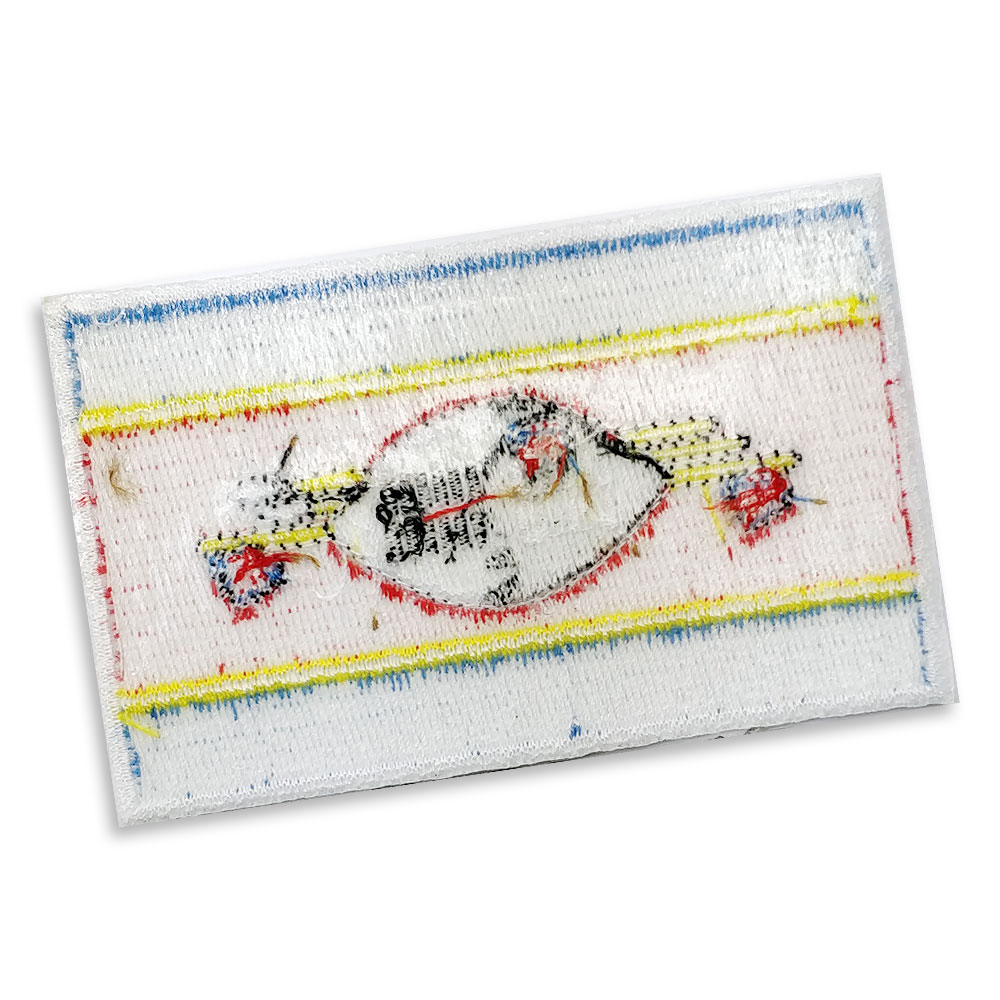
Eswatini Swaziland Embroidered flag badge with heat seal backing BLUE PANTONE: PMS 7455 C HEX (HTML): #3A5DAE; RGB: (58,93,174) CMYK: (90,66,0,0) RED PANTONE: PMS 187 C HEX (HTML): #A6192E; RGB: (166,25,46) CMYK: (7,100,82,26) YELLOW PANTONE: PMS 115 C HEX (HTML): #FDDA24; RGB: (253,218,36) CMYK: (0,6,87,0) BLACK PANTONE: PMS C HEX (HTML): #000000; RGB: (0,0,0) CMYK: (0,0,0,100)
Related products
-
Madagascar
€2.99 -
Guinea
€2.99 -
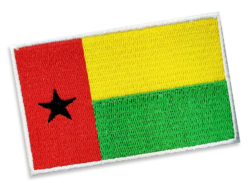
Guinea-Bissau
€2.99
Reviews
There are no reviews yet.