

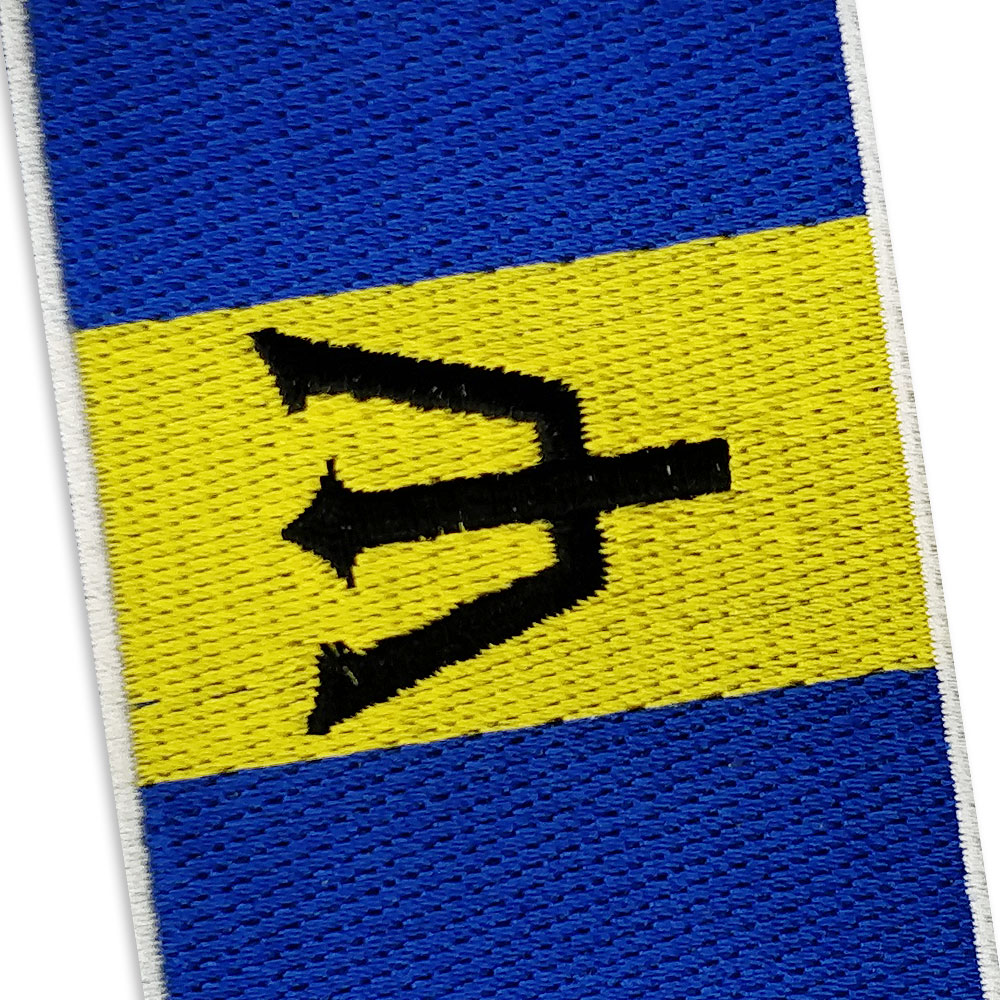
Flag of Barbados Size: The flag is rectangular and consists of three bands. All bands are equal in size. Two ultramarine blue shaded bands are present on the left and right sides of the flag. The central band of the flag is yellow. The top of a black shaded broken harpoon is fixated on the gold band of the banner. The color ratio of the flag is 1:1:1. The banner has a length and proportion of 3:2. Meaning: The two ultramarine blue groups address the blue oceans and sky of Barbados. And the gold shade shows the sand of the island’s seashores. The dark pike head addresses the wrecked pike of Britannia. It is taken from the old pioneer identification and addresses freedom. The messed-up lower shaft of the harpoon demonstrates Barbados’ emblematic break with its authentic and established ties as a previous settlement. The three marks of the pike address the three standards of a majority rules system – an administration of, for, and by individuals. History: In 1833 as a British state Barbados had gotten the British Windward Islands together with the Union Jack as its banner. In 1870, the banner of the state of Barbados was a blue ensign with the insignia of Barbados on the middle right half of the banner. The insignia of Barbados included Britannia in the ocean. In 1885 the country left the Windward Islands. From 1958-to 1962, Barbados was a piece of the West Indies Federation. This banner was a blue field highlighting four undulating white lines with a brilliant circle at the top. The plan addressed the sun beaming on the Caribbean Sea. In 1966, Barbados acquired freedom and the current banner was taken on as its public banner. Interesting Facts: The designer of the flag is Grantley W. Prescod. His configuration was picked in an open contest. A harpoon highlighted on previous banners however was viewed as an image of British rule, which is the reason the current banner shows a wrecked one. The three-pronged harpoon is additionally the customary image of the Roman sea god Neptune, who highlights the island’s $10 coin holding one.The flag must be flown at half-pole in grieving. The choice on the events on which the banner ought to be flown at half-pole rests with the Cabinet. The banner ought to never be flown with the pike upset besides as an indication of misery. The banner, in plain view, ought not to be permitted to contact anything underneath it – floors, furniture, trees, plants, structures, vehicles, water, and so on. 170 430
Reviews
There are no reviews yet.